
Reviewed · HA LONG BAY OVERNIGHT CRUISES
AUTHENIC 2D1N Trek & Bungalow Retreat with Dinh Hmong Family
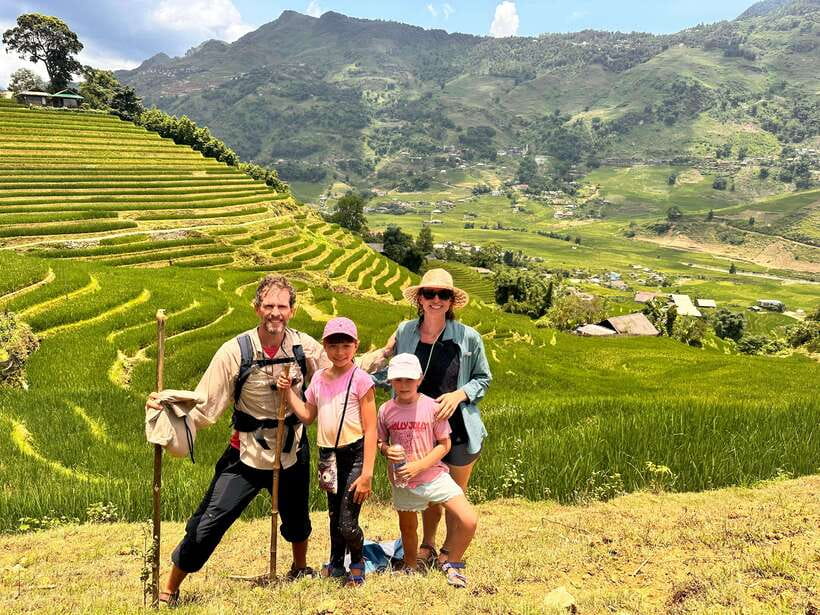
Sapa’s best moments often come on foot, when the road gives way to rice terraces, village paths, and the everyday work of mountain communities. On this two-day trek, Hmong guide Dinh leads you through Muong Hoa Valley and brings you home to her family’s Ta Van homestay for dinner, local stories, and a night in the hills.
I like two things in particular: the chance to learn from a Hmong guide about local customs and daily life, and the fact that the overnight stay is part of the experience, not just a place to sleep. One consideration: 18 kilometers of steep, uneven walking calls for sturdy shoes and a reasonable level of fitness.
What makes this trek worth considering
- A local guide from the Hmong community: Dinh and her sister meet you in Sapa and lead the two-day route.
- Rice terraces and village paths: Walk through Y Linh Ho, Lao Chai, Ta Van, and the Red Dao area.
- A family-run lunch stop: Both days include a meal with a local family.
- An evening at Dinh’s homestay: Help prepare dinner, hear about Hmong traditions, and meet the family.
- A waterfall finish: Day two passes through bamboo forest and rice fields to Giang Ta Chai waterfall.
- A practical $48 package: Guiding, village entry fees, four meals, one night’s lodging, water, and return transport are included.
Starting in Sapa and heading into Muong Hoa Valley
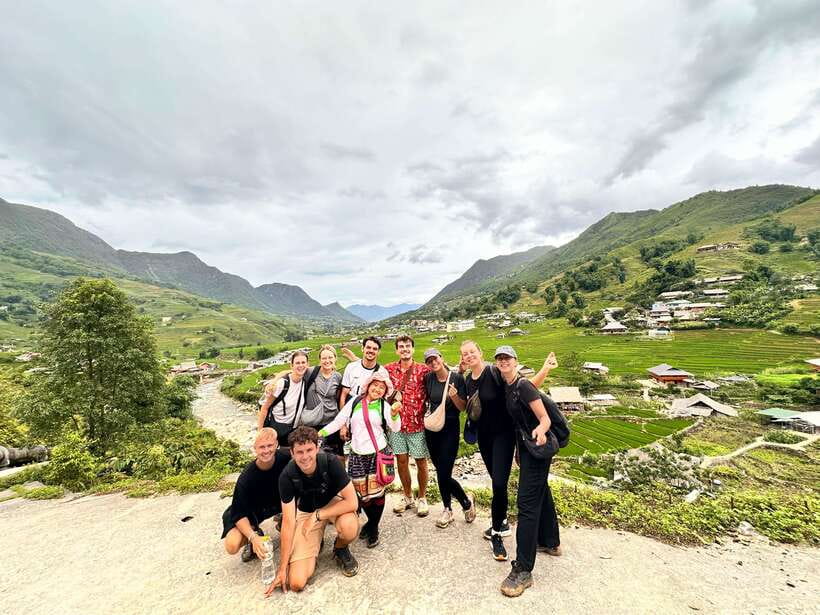
The trek begins at 9:00 AM, with Dinh meeting you at your hotel in Sapa Town or outside the local main church. After introductions, you head downhill toward Y Linh Ho, where the mountain views and terraces begin to replace the town’s streets.
The first day covers about 9 to 12 kilometers and takes roughly five and a half hours. The route is not a quick stroll. Expect uneven ground and some steep sections, with the pace and effort shaped by the path and your own fitness.
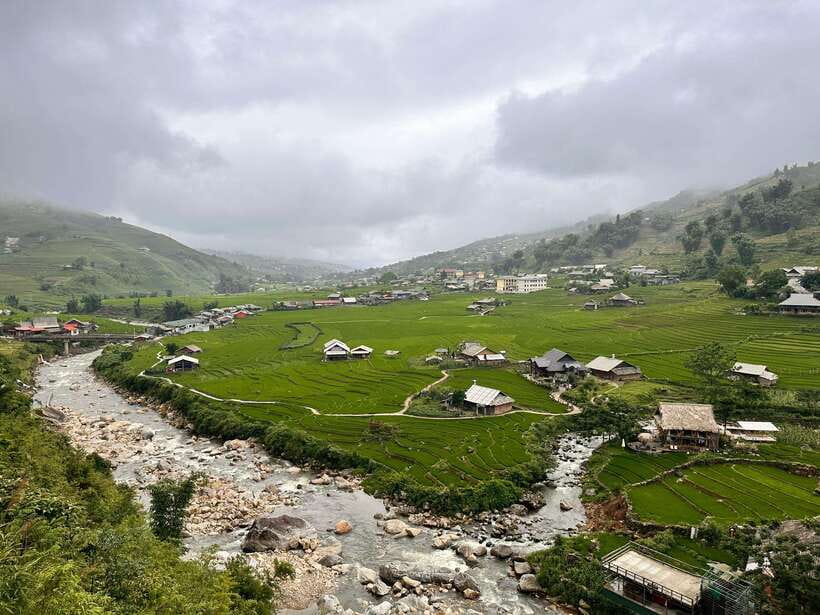
Y Linh Ho is a first chance to see how villages and farmland sit together in the valley. The terraces are the visual draw, but the setting matters too: this is working agricultural land, and what you see can change with the season. During planting or harvest, you may see local people at work in the fields.
The tour also passes buffalo, one of the details that helps make this more than a scenic walk. Bring a camera if you like, but keep it handy rather than treating every stop as a photo session. The guide’s explanations about local life are part of what gives the views context.
More overnight cruises in Sa Pa:
- EXPLORE SAPA: 2D1N TREKKING & HMONG CULTURE WITH DINH
★ 4.9 · 191 reviews - Amanda Cruise – Ha Long, Lan Ha Bay – All Inclusive 2D1N & 3D2N
★ 5.0 · 4,358 reviews - Sapa 2 Days 1 Night From Hanoi – Overnight in Ta Van Village
★ 5.0 · 2,669 reviews
Lunch with a local family, then on to Lao Chai
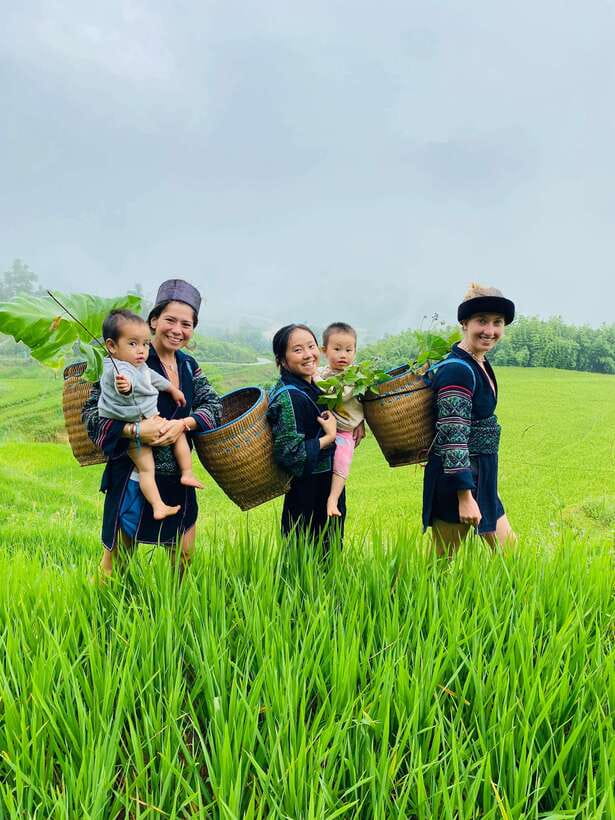
A small restaurant run by a Hmong family provides lunch on day one. The meal is included, and it breaks up a long walking day at a useful point. You can expect a local-style meal rather than a formal restaurant experience, though specific dishes are not set out in advance.
After lunch, the trek continues to Lao Chai, described as one of the area’s oldest and largest Hmong villages. From there, the path leads toward Ta Van, where Giay and Hmong communities live. Dinh shares information about differences between ethnic groups, traditions, and daily life as you go.
That cultural detail is especially valuable here. Sapa’s terraced fields are easy to photograph, but a local guide can help you understand who lives in the villages you pass and how traditions shape everyday life. Dinh is Hmong, speaks English and Vietnamese, and has a personal connection to the area.
The trek also covers Hmong marriage traditions, a specific subject that can make the cultural conversation more memorable than a general overview. The tour description does not spell out the details of those customs, so treat this as an opportunity to ask questions rather than a fixed lecture with a set script.
An evening at Dinh’s family homestay
When you reach the homestay in Ta Van, there is time to rest, take a hot shower, and settle in. The accommodation is described as simple, authentic, and cozy. Some people may find the setting and family welcome more appealing than hotel comforts, but it is not presented as a luxury stay.
The overnight setting is a central part of the tour’s appeal. The accommodation is in a bungalow-style homestay, and the views across rice fields are a recurring highlight. You wake in a quieter place than Sapa Town, surrounded by the sounds of nature and mountain air.
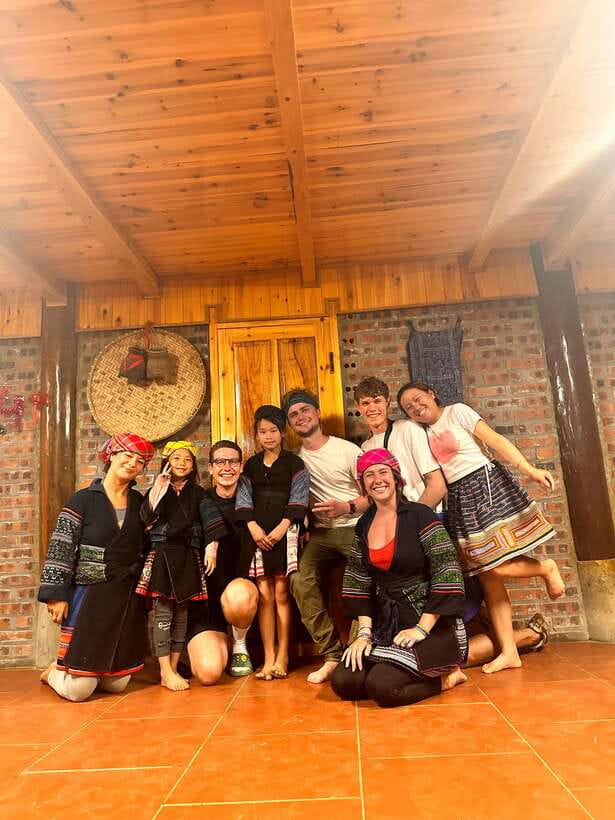
In the evening, you can join an informal cooking session with Dinh’s family and help prepare a traditional dinner. The meal is included. The point is not a formal cooking class with a set curriculum, but a chance to take part in an ordinary family activity and share food at home.
Over dinner, Dinh talks about her work supporting the education of 10 local children. Her students perform a traditional dance to welcome visitors, and there is time to meet and play with the children. The evening may also include local rice wine, known as Happy Water, and drinking games. If you do not drink alcohol, say so; the description does not require you to take part.
This is the most personal part of the trip, and it will suit you best if you are comfortable being a visitor in someone’s home. A family homestay offers a different kind of connection than a hotel, but it also means a simpler setup and a more social evening. Ask about your accommodation preferences when booking.
Day two through bamboo forest to Giang Ta Chai
The second morning starts with coffee or tea at the homestay, followed by breakfast. Then you set out for a four-to-five-hour walk of about 7 to 8 kilometers, going through bamboo forest and rice terraces toward Giang Ta Chai waterfall.
The waterfall provides a change of pace from the village and field sections. Swimming is possible if you want to take a dip, but it is optional. The information provided does not specify facilities at the waterfall, so bring only what you are comfortable carrying and be prepared for a natural setting.
From there, the route enters the Red Dao area. Dinh’s guidance helps you notice that the region is home to several ethnic communities, not one single culture. The villages and landscapes are not interchangeable, and the route gives you a chance to see that variety over two days.
After the Red Dao area, you reach the main road and have lunch with a local family. Then transport takes you back to Sapa, with the tour ending between 2:00 and 3:30 PM. That afternoon return makes it possible to continue your plans in Sapa, though it is wise not to schedule anything that depends on a precise arrival time.
More treks in Sa Pa:
- Sa Pa: Muong Hoa Valley Trek and Local Ethnic Villages
★ 4.6 · 864 reviews - Sapa: Eco Adventure Terrace Fields and Local Villages Trek
★ 4.9 · 636 reviews - From Sapa: 1-Day Guided Trek to Lao Chai & Ta Van with Lunch
★ 4.9 · 416 reviews - Sapa 1 Day Long Trek: Trek to Hau Thao and Sa Seng Villages
★ 4.6 · 344 reviews
What $48 covers, and where the value lies
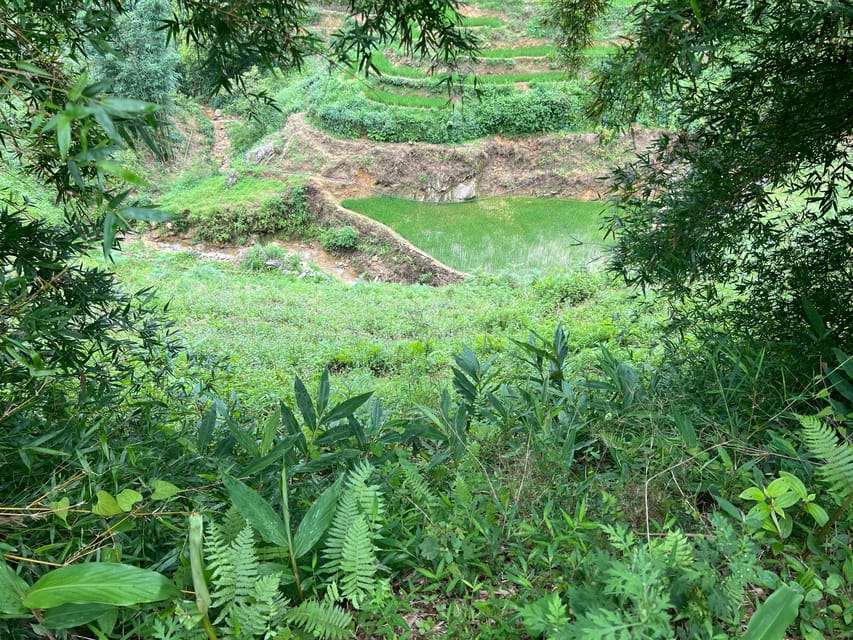
At $48 per person, the price includes a local English-speaking guide for both days, entry fees for four villages, two lunches, one dinner, one breakfast, one night at the family homestay, one large bottle of drinking water per person per day, and transport back to Sapa after the trek. The T-shirt is listed as a gift at the end of the journey.
That is a useful bundle for a two-day trip. You are paying not only for the walking route, but also for guiding, meals, lodging, village access, and the return ride. The family-run meal stops and overnight stay add a personal dimension that would be hard to get from a short guided walk.
Personal expenses are extra, including snacks, other drinks, and souvenirs. Bring snacks if you like having something between meals, and plan for any drinks beyond the provided water. The tour does not give a separate price for optional purchases.
The main value is not simply the number of items included. Dinh’s role as a local Hmong guide, the conversations about customs, and the time spent with her family give the trek a human focus. If your priority is a comfortable hotel, a private tour, or a low-effort outing, this may not be the best fit.
How demanding is the 18-kilometer route?
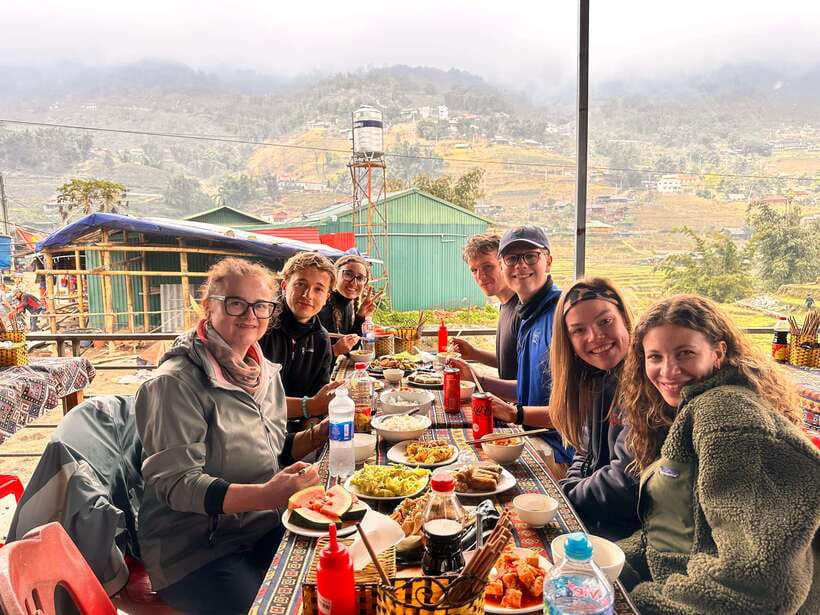
The overall trek is about 18 kilometers over two days, with the first day covering 9 to 12 kilometers and the second about 7 to 8. The terrain includes steep and uneven sections, and the tour rates the fitness level as moderate. Those figures are a useful guide, but the distance alone does not tell the whole story: footing and climbs can make a shorter stretch feel strenuous.
Comfortable walking shoes are essential. A hat, sunscreen, camera, snacks, and water are also on the suggested packing list. You receive a large bottle of water per person each day, but carrying your own water is still sensible, especially if you tend to drink often while walking.
This trek is not suitable for pregnant people, people with back problems, mobility impairments, vertigo, or a fear of heights, or those over 70. The route is best for someone who can handle a full day on foot and is comfortable with a basic homestay.
Who should choose Dinh’s Sapa trek?
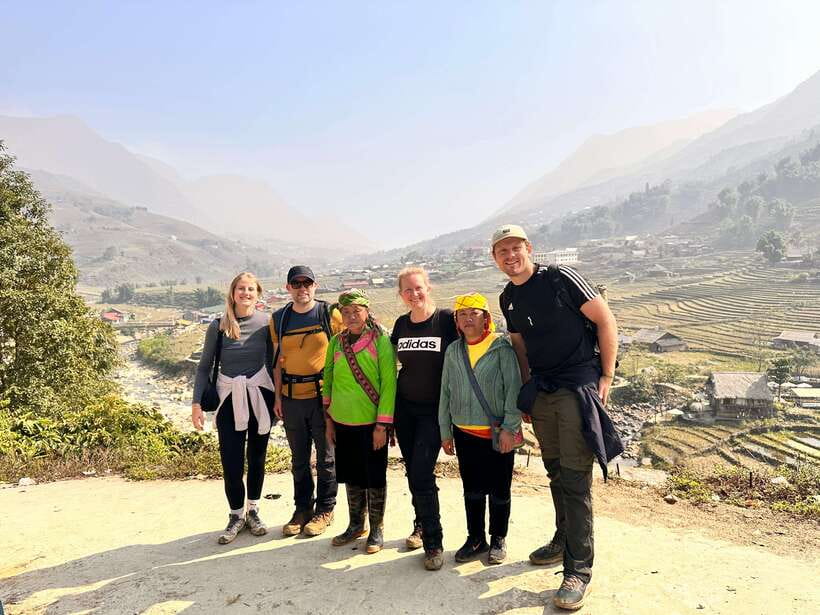
Choose this experience if you want a mix of mountain scenery, village walking, and time with a local family. It is particularly well suited to people who want to understand Hmong culture through conversation and shared meals, rather than simply pass through villages for photographs.
It can also suit you if you enjoy an active trip but want the overnight stay to provide a gentler, more personal counterpoint to the walking. The first day is the longer one, while day two brings bamboo forest, the waterfall, and a shorter distance before the ride back.
Think twice if you need polished accommodation, dislike group outings, or are uncomfortable with steep, irregular paths. The trek is a group tour, although the group size is not specified. It also includes a family evening with children and local rice wine, so it is more social than a quiet night alone.
Book before 1:00 PM on day one if you want to take part in the full itinerary. Children under three can join for free, but the provider asks you to mention them in advance. You can reserve now and pay later, and cancellations made at least 24 hours ahead qualify for a full refund.
Should you book this Sapa trek?
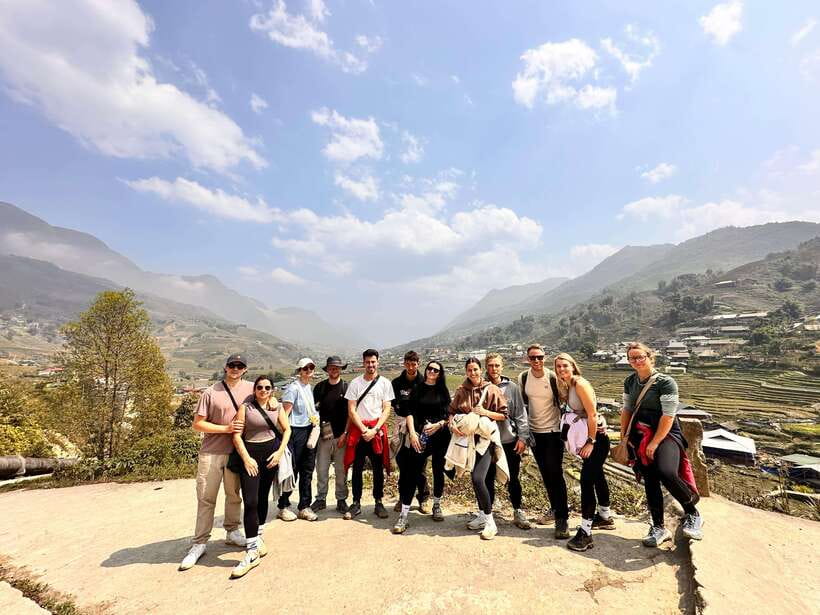
I would put this trek high on the list if you value a local guide, an overnight family stay, and a substantial walk through the Muong Hoa Valley. The strongest reason to choose it is the combination: Dinh’s cultural perspective, the homestay dinner, and two days of changing scenery make it more personal than a simple out-and-back hike.
The trade-off is clear. You need to be ready for about 18 kilometers of uneven walking and simple accommodation, and you should not expect a private tour or a highly polished hotel stay. If that sounds like the kind of travel you enjoy, $48 covers a lot of the practical pieces while keeping the focus on the people and places along the route.
FAQ
How long is the trek?
The trek covers about 18 kilometers over two days. Day one is about 9 to 12 kilometers and takes roughly five and a half hours; day two is about 7 to 8 kilometers and takes four to five hours.
Where does the tour start?
Dinh meets you at your hotel in Sapa Town or in front of the local main church. The trek starts at 9:00 AM.
What meals are included?
The price includes two lunches, one dinner, and one breakfast. The lunches are with local families, and dinner is at Dinh’s family homestay.
What is included in the $48 price?
The price includes an English-speaking local guide for two days, entry fees for four villages, four meals, one night at the homestay, one large bottle of drinking water per person per day, and transport back to Sapa.
What is the homestay like?
The homestay is simple, authentic, and cozy, with basic amenities. The tour description also identifies it as a bungalow-style stay, and asks you to share any accommodation preferences when booking.
Is the trek suitable for beginners?
The fitness level is described as moderate, with steep and uneven terrain over about 18 kilometers. You should be comfortable with a substantial two-day walk.
What languages does the guide speak?
The guide speaks English and Vietnamese.
Can children join the tour?
Children under three can join for free, but you need to inform the provider in advance.
What happens if I need to cancel?
You can cancel up to 24 hours in advance for a full refund.
More two-day trips in Sa Pa
- Sa Pa: 2-Day Trekking Trip with Ethnic Minority Homestay
★ 4.7 · 145 reviews - 2-Day Fansipan Mountain Trek – Indochina’s Highest Peak
★ 4.3 · 42 reviews - 2 Day-2 Night Sapa Trekking: Overnight Train &Limousine Bus
★ 3.9 · 7 reviews - 2 days 2 nights in Sapa – Moana – Fansipan – Cat Cat Village
★ 4.2 · 6 reviews
New on the list for Sa Pa
- From Hanoi: Sapa 3-Day Medium Trek and Limousine Trip★ 4.5 · 59 reviews
- 2 Night Lao Chai-Ta Van Homestay- Trekking & Fansipan Visit★ 4.0 · 8 reviews
- 2 days 2 nights in Sapa – Moana – Fansipan – Cat Cat Village★ 4.2 · 6 reviews
- 2 DAYS Explore SA PA’S Village through Scenic walking Trails★ 5.0 · 6 reviews
- 2-Day Fansipan Mountain Trek – Indochina’s Highest Peak★ 4.3 · 42 reviews
- 2 Day-2 Night Sapa Trekking: Overnight Train &Limousine Bus★ 3.9 · 7 reviews
- Trekking Sapa 1 Day With Local Guide, Terraced Rice Fields★ 4.5 · 5 reviews
- 1 DAY Trek the Most Beautiful Villages of Sapa & Local Guide★ 5.0 · 6 reviews
Ha Long Bay Overnight Cruises, compared.

Amanda Cruise – Ha Long, Lan Ha Bay – All Inclusive 2D1N & 3D2N
Read our review →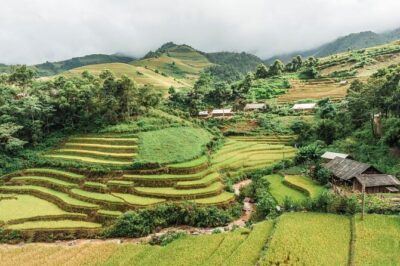
Sapa 2 Days 1 Night From Hanoi – Overnight in Ta Van Village
Read our review →

Halong Bay Cruise 2 days 1 night from Hanoi included transfer
Read our review →
Best Lan Ha Bay Cat Ba Cruise 2 Days 1 Night Less touristy
Read our review →

Swan Cruises Ha Long & Bai Tu Long Bay 2D1N – Thien Canh Son Cave
Read our review →
2D1N: Halong Bay 4-Star Cruise – Cave, Kayak, Swim, Meals
Read our review →Browse the lists this tour appears in