
Reviewed · SAPA TREKKING TOURS
Trekking Through Rice Terraced Fields – 1Day
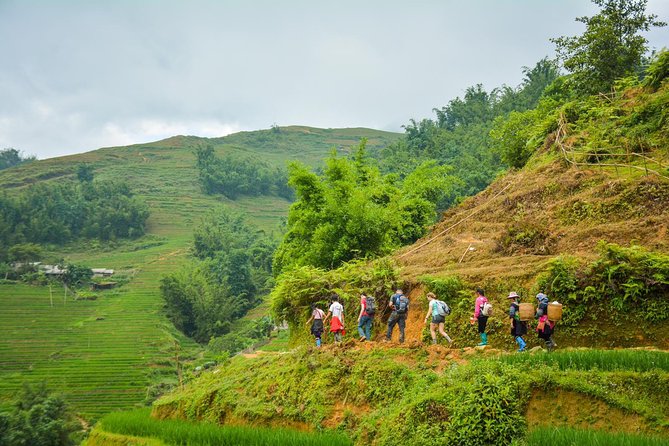
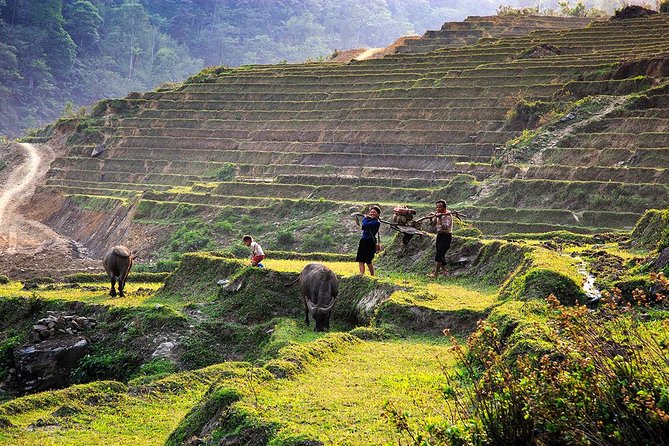
The pleasure of this Sapa trek is seeing the rice terraces from the footpaths that link local villages, not just from a roadside viewpoint. A local guide leads you through Y Linh Ho, Lao Chai, and Ta Van, with mountain scenery and a chance to learn about Hmong and Giay life along the way.
I like two things in particular: the local guide’s perspective on customs and daily work, and the fact that lunch, village fees, and transport back to Sapa are included in the $45 price. Guides such as Chu, Sang, and Vang have led the walk, though you cannot count on a particular guide when booking.
The main caution is the walking itself. This is a five- to six-hour trek, with a rice-paddy climb and, depending on the route and your plans, roughly 10 to 12 kilometers on foot. Mud can make the paths slippery, so this is not an easy stroll or a good match for mobility issues.
At a glance
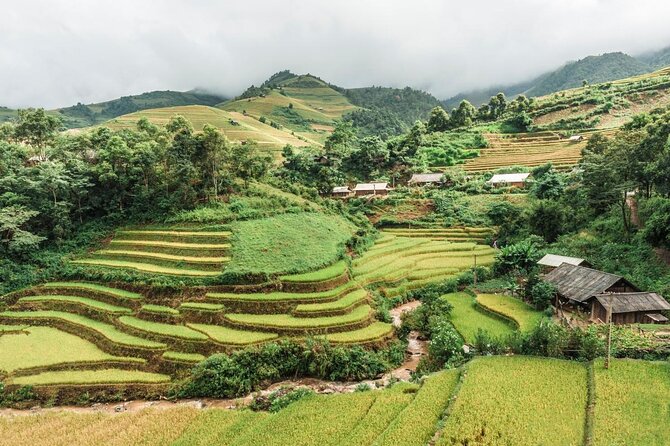
- Three village stops: Walk through Y Linh Ho, Lao Chai, and Ta Van, with the route focused on Hmong and Giay communities.
- A local guide: Guides share information about village life, traditions, rice farming, and the surrounding area.
- A proper half-day trek: Plan on five to six hours, with some uphill walking and uneven, potentially muddy ground.
- Lunch and return transport included: The fee covers a local meal, one small bottle of water, village entry fees, and a ride back to Sapa.
- Small-group possibility: The maximum group size is 15, though some departures have been much smaller.
- Good shoes matter: Grippy footwear is a practical must, especially after rain.
Starting out below Sapa
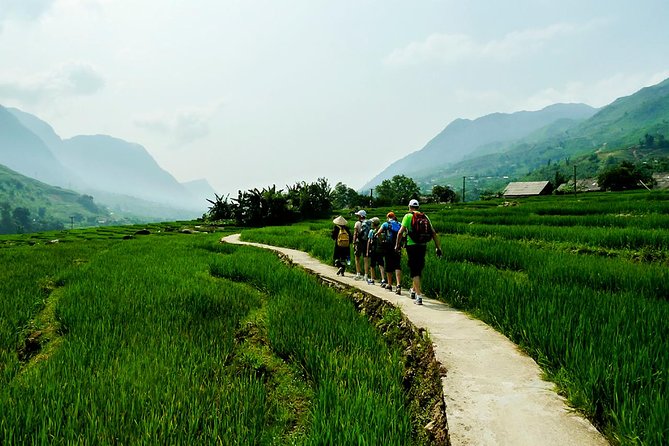
The tour begins in Sapa, where the guide meets you at your hotel or near the main church. The stated start time varies in the tour details: one place gives 9 am, while the meeting information says 9:30 am. Confirm your exact meeting time before setting off, and arrive ready to walk.
From town, the route heads about two kilometers down toward the Cat Cat road before continuing toward Y Linh Ho. That early descent takes you away from Sapa’s central streets and into the countryside. It is a useful reminder that this is a point-to-point village trek, not a loop around town.
The tour is capped at 15 people. That is small enough for questions to be practical, though group size can vary: some outings have had only two people, while another group of five found that size comfortable. A smaller group can make it easier to talk with the guide, but the maximum is not a promise of a private tour.
More treks in Sapa:
- Hanoi – Sapa 2 Days 1 Night Overnight At Homestay
★ 5.0 · 899 reviews - Sa Pa: Muong Hoa Valley Trek and Local Ethnic Villages
★ 4.6 · 864 reviews - From Hanoi: 2-Day Sapa Trekking Trip with Homestay & Meals
★ 4.8 · 704 reviews
Y Linh Ho: terraces, paths, and village life
The first stop is Y Linh Ho, where the itinerary allows about two hours. This is where the walk begins to deliver what most people come for: views across mountain slopes and rice terraces, with a chance to see how the villages fit into the valley rather than viewing the fields from a single lookout.
The guide’s role can make a real difference here. You can ask about rice cultivation, local work, house building, and Hmong customs. The tour description also says the guide may explain Hmong marriage traditions. These details give the scenery human context: the fields are not simply a pretty backdrop, but part of daily life and work.
Expect walking on village tracks and rice-field paths, with some climbing. One person described climbing up a rice paddy, while another found the overall route long and difficult. The exact effort can depend on the route, weather, and your pace, but you should not assume that the walking is flat or gentle.
The guide’s style also matters. Chu, Sang, Vang, Mai, Du, and other local guides have been praised for answering questions and sharing insights. One guide, Chu, adjusted the day for a family with a three-year-old; another, Mau, patiently walked with children aged six to twelve. Those accounts suggest that guides can be attentive to a group’s needs, but the route still calls for reasonable fitness.
Lao Chai: a closer look at Black Hmong culture
After a break, the trek continues to Lao Chai, a village of Black Hmong, with about two hours set aside for this part of the route. Here, the cultural side of the walk can come into sharper focus. The guide can help explain differences between ethnic groups and talk about local traditions and work in a way that a map or independent walk cannot.
This is also a good stretch to ask questions. Some guides are naturally chatty, while one participant felt their guide offered little information unless prompted. If learning about local life is important to you, speak up: ask about what you see, how rice is grown, or how village houses are built. A guided walk is most rewarding when you treat it as a conversation, not just a path to follow.
The terrain is part of the experience, and part of the challenge. A trekker described a route of about 12 kilometers and advised wearing trekking boots if the track is wet. Another completed around six miles and reported sore legs the next day. These are useful guideposts, not a guaranteed distance for every departure. If you have concerns about stamina, ask the operator about the expected route and walking distance before booking.
Ta Van: meeting the Giay community
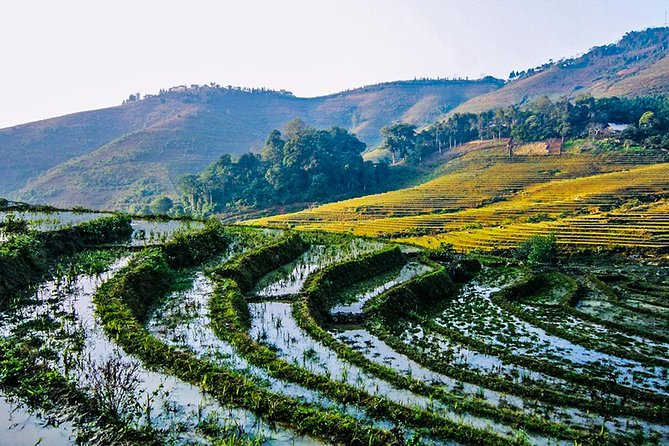
The final village stop is Ta Van, home to the Giay community. The walk takes about an hour here before you reach the vehicle for the return to Sapa. The shift from the Black Hmong village of Lao Chai to Ta Van gives the guide a natural chance to explain cultural differences between communities.
The tour is described as covering Hmong, Giay, and Red Dao communities, though the named stops and the specific details given for the route focus on Black Hmong and Giay villages. If meeting Red Dao people is a priority, check what the current route includes rather than assuming there will be a dedicated stop or visit.
You may also see everyday village activity along the way. Animals such as oxen, ducks, and chickens have been spotted during the walk. These moments are not scheduled attractions, but they can make the route feel more like a passage through lived-in communities than a series of scenic photo stops.
Or change pace with something different:
- Sapa 2 Days 1 Night From Hanoi – Overnight in Ta Van Village
★ 5.0 · 2,669 reviews - Sapa: Fansipan Cable, Cat Cat Village & Moana Instagram Tour
★ 5.0 · 777 reviews - Sapa 3 Days 2 Nights Trekking Tour (1 Night In Ta Van Village, 1 Night In Hotel)
★ 5.0 · 699 reviews - Sapa: Eco Adventure Terrace Fields and Local Villages Trek
★ 4.9 · 636 reviews
Lunch, water, and the ride back

Lunch is included and consists of local food with vegetables and meat, with a vegetarian option available. The meal is a welcome pause after several hours on foot. Food is a matter of taste, and one person found their lunch mediocre, so think of it as practical fuel rather than a reason on its own to book.
The tour includes one small bottle of water per person. Extra drinks, including bottled water or beer at the restaurant, cost extra. Bring additional water if you know you drink a lot while walking, especially in warm weather.
After Ta Van, transport takes you back to Sapa. That ride is included, which is valuable after a long walk. One participant chose to continue on foot instead, turning a roughly seven-kilometer trek into an 11-kilometer round trip to their homestay. That was their choice, not a standard part of the tour, so do not count on walking back unless you agree on it with your guide.
What the $45 price gets you
At $45 per person, this is a useful package if you want a guide, village access, lunch, water, and a ride back without arranging each piece yourself. The guide is the core of the value: the scenery is available to anyone who can find a path, but a local guide can explain village customs and answer questions as you go.
The included village fees and return ride also keep the day straightforward. You are not paying only for the walk, and you avoid figuring out transport back after finishing in Ta Van. Still, the tour does not include personal travel insurance or extra drinks, and tips are not included.
Value depends partly on what you want from Sapa. If you mainly want a scenic walk, you may feel the cost is high compared with walking independently. If you want local context, help on the route, and a meal and return transport bundled in, the price makes more sense.
Preparing for a muddy mountain walk
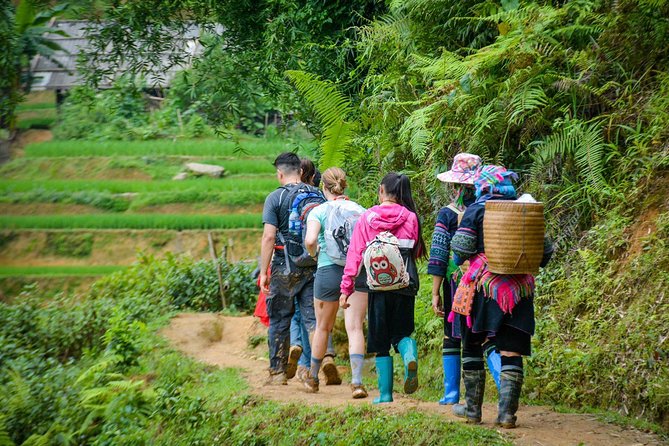
Wear shoes with reliable grip. Several people specifically found the track muddy or slippery, and trekking boots were recommended when wet. Ordinary smooth-soled shoes can turn a beautiful walk into a careful search for stable footing.
Bring clothing suited to a long walk and be prepared for changing ground underfoot. The route includes a climb through a rice paddy, and the overall outing lasts five to six hours. The provided tour details do not specify a packing list or weather plan, so check conditions before you go and ask the operator what they recommend for that day.
The walk is described as requiring moderate fitness. It is not suitable for people with mobility issues, and one participant considered the route too long and difficult for adults who were not in good shape. Families have completed it with children, including young children, but that does not make it a short or effortless outing. Be honest about your pace and stamina before committing.
Who will enjoy this trek most

This tour suits you if you want to spend much of a day outdoors, see rice terraces at walking pace, and learn about Hmong and Giay life from a local guide. It can be a strong choice if you have only one day in Sapa and want both scenery and cultural context in a single outing.
It also works for families whose children are comfortable walking for several hours. Guides have been patient with children, but the route remains a substantial trek. If a child tires easily, or you need a flat and predictable path, this may not be the right day out.
It is less suitable if you have mobility limitations, dislike steep or muddy ground, or expect a leisurely stroll with little effort. And if you prefer silence and scenery over guided conversation, you may not get full value from the cultural side of the tour. The guide can be helpful, but you may need to ask questions to draw out the detail you want.
Should you book the Sapa rice terrace trek?
Book it if you are fit enough for a five- to six-hour walk and want more than a roadside view of the terraces. The combination of village paths, a local guide, lunch, entry fees, and return transport makes the day easy to plan, while the cultural conversations can give the scenery real meaning.
Skip it if steep, uneven, or slippery ground would make the day uncomfortable, or if you need a short walk with a fixed, low-effort pace. If you are unsure, ask about the expected distance and current trail conditions before booking. For a fit walker with a day to spare, this is a practical way to meet Sapa on foot.
FAQ
How long does the tour take?
Plan on approximately five to six hours. The itinerary assigns about two hours to Y Linh Ho, two to Lao Chai, and one to Ta Van, with time for a break and the return ride.
What time does the tour start?
The tour details give both 9 am and 9:30 am as a start time. Confirm the exact time with the operator before the day of the trek.
Where does the tour start?
The meeting point is listed at Trekking Tour Sapa, 09 Thác Bạc, Sa Pa. Pickup is offered, and the guide may meet you at your hotel in Sapa Town or in front of the main church.
Which villages does the trek visit?
The named stops are Y Linh Ho, Lao Chai, and Ta Van. Lao Chai is identified as a Black Hmong village, and Ta Van as a Giay village.
How difficult is the walk?
The tour calls for moderate physical fitness and includes uphill walking. The route can be long, and mud may make it slippery. It is not suitable for people with mobility issues.
What should I wear?
Wear shoes with good grip. Trekking boots are recommended when the trail is wet or muddy.
Is lunch included?
Yes. Lunch includes local food with vegetables and meat, and a vegetarian option is available. Extra drinks at the restaurant are not included.
Is transport back to Sapa included?
Yes. Transport back to Sapa is included after the walk.
Can I cancel for a refund?
You can receive a full refund if you cancel at least 24 hours before the start time. Cancellations made less than 24 hours before the start time are not refunded.
New on the list for Sapa
- From Hanoi: Sapa 3-Day Medium Trek and Limousine Trip★ 4.5 · 59 reviews
- 2 Night Lao Chai-Ta Van Homestay- Trekking & Fansipan Visit★ 4.0 · 8 reviews
- 2 days 2 nights in Sapa – Moana – Fansipan – Cat Cat Village★ 4.2 · 6 reviews
- 2 DAYS Explore SA PA’S Village through Scenic walking Trails★ 5.0 · 6 reviews
- 2-Day Sapa Tour – Overnight in Ta Van Village (All in One)★ 3.7 · 3 reviews
- 2-Day Fansipan Mountain Trek – Indochina’s Highest Peak★ 4.3 · 42 reviews
- 2 Day-2 Night Sapa Trekking: Overnight Train &Limousine Bus★ 3.9 · 7 reviews
- Trekking Sapa 1 Day With Local Guide, Terraced Rice Fields★ 4.5 · 5 reviews
Sapa Trekking Tours, compared.

Halong Bay Full Day with Kayaking, Hiking viewpoint, Cave – Deluxe To Luxury
Read our review →
Sa Pa: Muong Hoa Valley Trek and Local Ethnic Villages
Read our review →

Sapa 3 Days 2 Nights Trekking Tour (1 Night In Ta Van Village, 1 Night In Hotel)
Read our review →
Eco Adventure Terrace Fields and Local Villages Trek
Read our review →
3-Day Trekking Adventure of Sapa from Hanoi – Stay Ta Van Village
Read our review →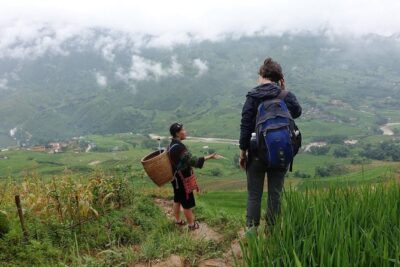
Number one top rated ethical cultural trekking and homestay by ETHOS
Read our review →Browse the lists this tour appears in