
Reviewed · SAPA TREKKING TOURS
Half Day Sapa Trekking to Visit Lao Chai – Ta Van
The best part of this Sapa walk is how quickly the town gives way to terraced fields, mountain paths, and villages in the Muong Hoa Valley. You cover about 9 km on foot, with a local guide who can explain village life as you go, then ride back to Sapa rather than walking the return route.
I like two things in particular: the guide-led encounters make this more than a scenery walk, and the half-day format leaves you free for lunch and the rest of your day. The trade-off is real underfoot: steep, uneven paths can turn muddy and slippery, and local women may walk alongside you hoping to sell handicrafts.
Key points
- About 9 km on foot: The trek takes roughly four hours and crosses village paths, rural roads, and farm tracks.
- Three stops in the valley: You pass through Y Linh Ho, Lao Chai, and Ta Van, with time for visits, photos, and a break.
- Local guides shape the experience: Guides named Soso, Sua, Tung, Ku, Song, and Tran have led this walk, sharing details about village culture and daily life.
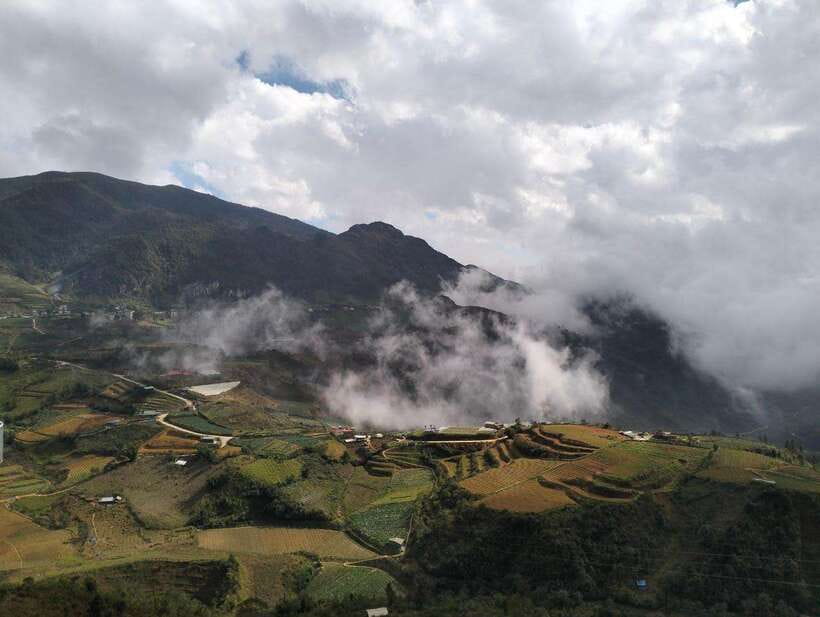
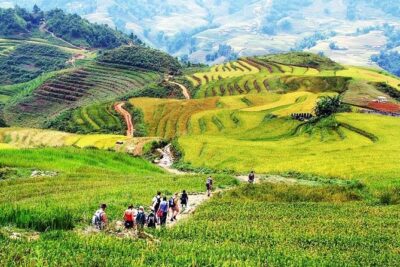
- Views depend on the weather: Clear skies can reveal rice terraces, the Muong Hoa Stream, and Hoang Lien Son Mountain; rain and cloud can make the path slick and obscure the views.
- A practical half day: Pickup is scheduled around 8:10 to 8:20 in the morning, with a return to Sapa Town around noon.
- $22 covers the basics: Bus transport, an English-speaking local guide, and entrance tickets are included. Drinks, insurance, VAT, and personal expenses are extra.
From Sapa Town to the valley paths
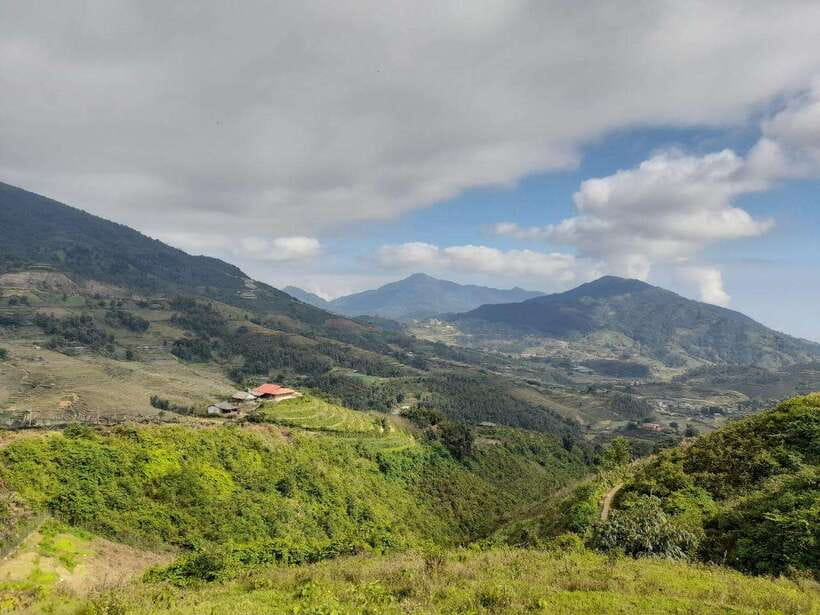
The morning begins with pickup at your hotel in Sapa, usually between 8:10 and 8:20. Pack light, wear proper walking shoes, and bring water and sun protection. You are heading out for a substantial walk, not a stroll around town.
The bus takes you out toward Y Linh Ho, where the trek begins. This short ride is useful: it gets you to the valley so your time and energy go toward the villages and scenery, rather than retracing the same route on foot. A modern air-conditioned bus and an experienced driver are included for the Sapa to trailhead and return sections.
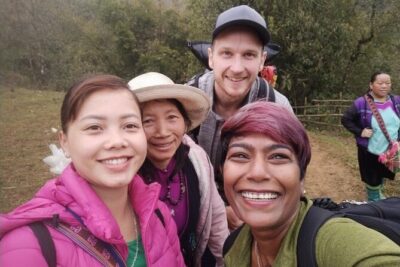
You will meet your English-speaking local guide before setting off. The guide is a key part of the outing, not just someone to point out the route. Guides including Soso, Sua, Tung, Ku, Song, and Tran have led groups here, and the walk is a chance to hear about local customs, farming, and village life from someone with a direct connection to the area. Guide assignments can vary, so do not book expecting a particular person.
The group then heads into the countryside on foot. The route combines village streets, rural roads, and dirt paths, with views opening across the valley as you go. The terrain is not prepared like an easy city walking trail, so you will need to watch your footing and be comfortable walking for several hours.
More Sapa trips in Sa Pa:
- Sa Pa: Muong Hoa Valley Trek and Local Ethnic Villages
★ 4.6 · 864 reviews - Sapa: Eco Adventure Terrace Fields and Local Villages Trek
★ 4.9 · 636 reviews - From Sapa: 1-Day Guided Trek to Lao Chai & Ta Van with Lunch
★ 4.9 · 416 reviews
Y Linh Ho and the first views
Y Linh Ho is the first named village stop. You have time to visit, take photos, and hear from your guide before continuing through the valley. The pace gives you a chance to look around rather than treating the village as a quick photo stop on the way to somewhere else.
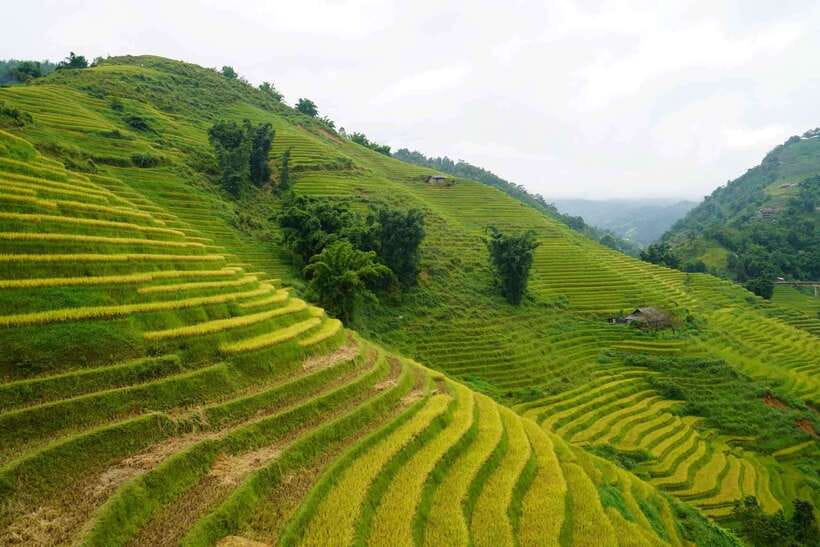
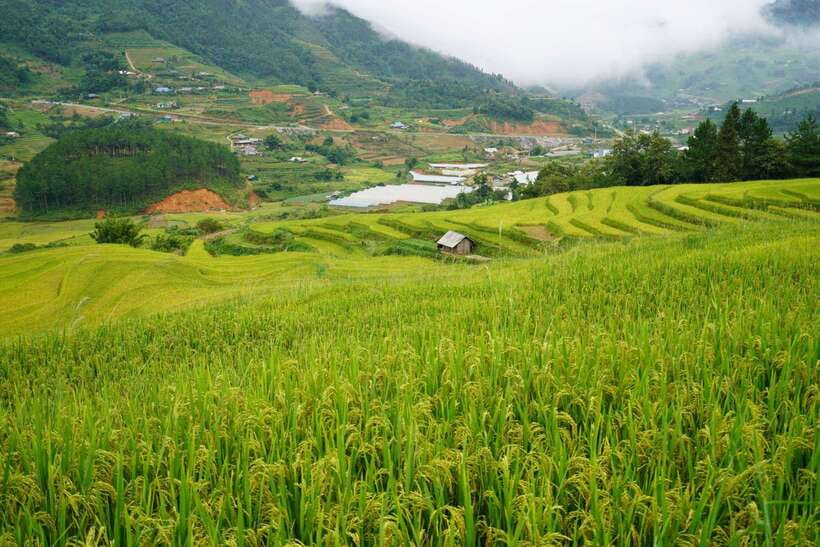
From here, the trail runs through rice terraces and along the Muong Hoa Stream toward Lao Chai. On a clear day, the views stretch across fields and mountain slopes, with Hoang Lien Son Mountain providing the dramatic backdrop. If clouds roll in, the scenery can feel more enclosed. Rain can also turn the track into a slippery mix of mud and uneven ground.
The terraces are a working part of the countryside, not a set piece. Your guide can explain local farming practices along the way. One guide, Sua, has taken walkers through her own fields and shown how the work is done. That kind of conversation adds context to the views: you see not only the shape of the hills, but how village life fits into them.
This is also where the walk’s physical side becomes clear. The route includes slopes and rough sections, and heat can make it harder even when the distance sounds manageable. If you have limited mobility or are not comfortable on uneven paths, this is not the right outing. The tour is not suitable for wheelchair users.
Lao Chai and the Black Hmong community
Lao Chai is home to Black Hmong residents and is one of the main village visits on the route. The guide introduces you to the area and its people, with time to look around and take photos. The value here is the combination of place and explanation: it is easier to understand what you are seeing when you can ask about daily routines and local traditions as you walk.
The walk through Lao Chai is not a museum visit, and you should not expect a staged cultural show. You are moving through a living community, and the experience is shaped by the guide, the route, and what is happening around you that day. Keep your camera respectful and follow your guide’s lead when approaching homes or residents.
You may also encounter local women walking beside the group and offering handmade goods. Some will lend a hand on muddy or slippery sections, then hope you will buy something. This can feel awkward, especially if you simply want to focus on the scenery. A polite, firm response is useful if you do not want to shop; if you are interested in a craft, take a moment to look and decide without feeling obliged to buy.
The shopping element is worth knowing about before you go. A few walkers have found the repeated offers distracting, while others have enjoyed the chance to buy local crafts. Children may also approach with items for sale. You cannot control how often this happens, but knowing it may come up can help you respond calmly and keep the walk in perspective.
The final stretch to Ta Van
From Lao Chai, the route continues to Ta Van, home to the Dzay ethnic community. The village stop includes time for a break, a visit, and photos. This is a natural point to pause after several hours on foot, take in the surroundings, and listen as your guide explains more about the people who live in the valley.
The pace and amount of time at each village can depend on the group and conditions. The planned visit to Ta Van is the longest stop, at about an hour and a half, though the full walking portion is described as roughly four hours. This is not a rushed bus tour with a string of brief photo stops. You spend much of the morning moving on foot, with the villages and views unfolding along the way.
At Ta Van Bridge, a bus picks you up for the ride back to Sapa. The scheduled return to town is around noon, making this a useful option if you have only one day in the area or want the afternoon free. Allow some flexibility around the timing: one delayed start has meant a shortened walk, so the full route is not guaranteed if the morning runs behind.
More treks in Sa Pa:
- Sapa 1 Day Long Trek: Trek to Hau Thao and Sa Seng Villages
★ 4.6 · 344 reviews - EXPLORE SAPA: 2D1N TREKKING & HMONG CULTURE WITH DINH
★ 4.9 · 191 reviews - Sa Pa: 6-Hours Muong Hoa Valley Trek with Local Ethnic guide
★ 4.5 · 178 reviews - Sa Pa: 2-Day Trekking Trip with Ethnic Minority Homestay
★ 4.7 · 145 reviews
How demanding is the 9 km walk?
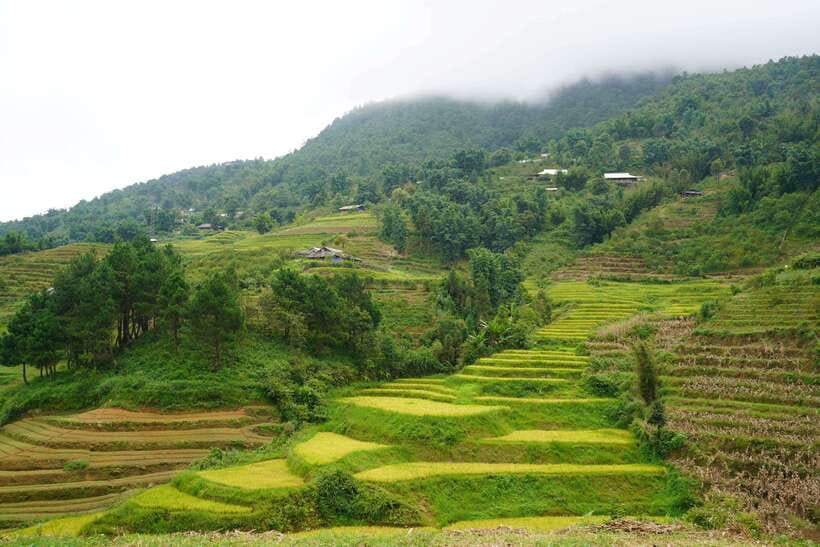
The distance is manageable for many people with a reasonable level of fitness, but the surface matters as much as the mileage. You may be walking on uneven paths, dirt tracks, village roads, and steep sections. After rain, the trail can become muddy and slick; in hot weather, the effort can feel greater than the distance suggests.
Choose hiking shoes or sports shoes with good grip. Some walkers recommend rubber boots for wet conditions, but the essential point is footwear that handles mud and uneven ground. Bring a sun hat, sunglasses, sunscreen, and sportswear or hiking pants. A small first aid kit is also on the suggested packing list.
Take a camera if you want to capture the terraces and village scenery, but keep your hands free where the path gets slippery. Pack light, as the morning involves several hours of walking. The tour does not include beverages, so bring what you need to drink.
Weather can change the character of the outing. Clear skies may open up wide views, while cloud and rain can limit visibility and make the trail harder. A guide may help you negotiate muddy sections, but this is still a walk over natural ground, not a paved route. If the weather is poor or you are unsure about your fitness, consider whether you would be comfortable continuing before you book.
What $22 gets you
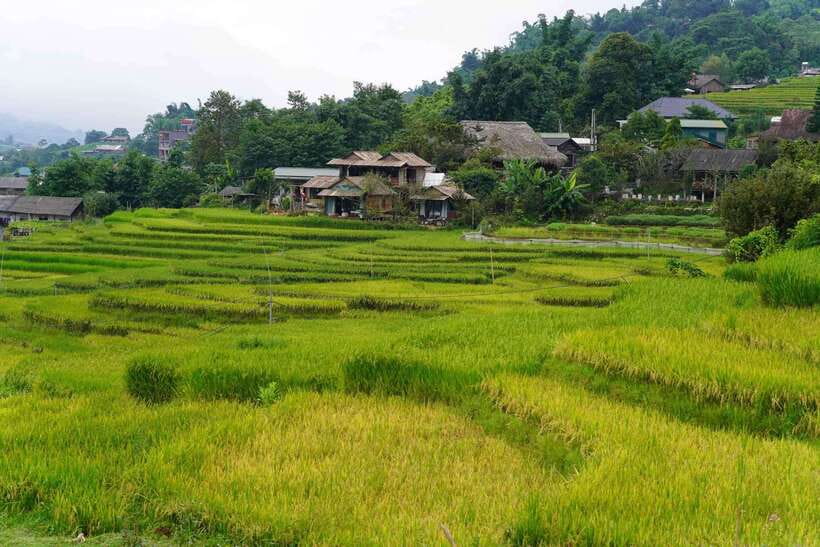
At $22 per person, the price is reasonable for a guided outing that includes transport from Sapa to the trail area and back, an English-speaking local guide, and entrance tickets to the named sites. The bus return is a practical advantage: you get a valley walk without having to cover the same ground twice.
The guide is where much of the value lies. Without someone to explain the ethnic communities and the local way of life, you would still see the rice fields and mountain views, but miss much of the human context. The route is especially worthwhile if you want more than a scenic transfer and have time to ask questions as you walk.
Budget separately for drinks, travel insurance, VAT, personal expenses, and any crafts you choose to buy. Lunch is not listed among the inclusions, so plan for food after the walk rather than assuming it is part of the $22 price. The morning schedule should put you back in Sapa around noon, leaving time to find a meal in town.
The tour offers free cancellation up to 24 hours ahead for a full refund, and you can reserve without paying immediately. Those terms help if your plans are still taking shape, though they do not change the basic realities of the route: weather, fitness, and trail conditions matter.
Who should book this Sapa trek?
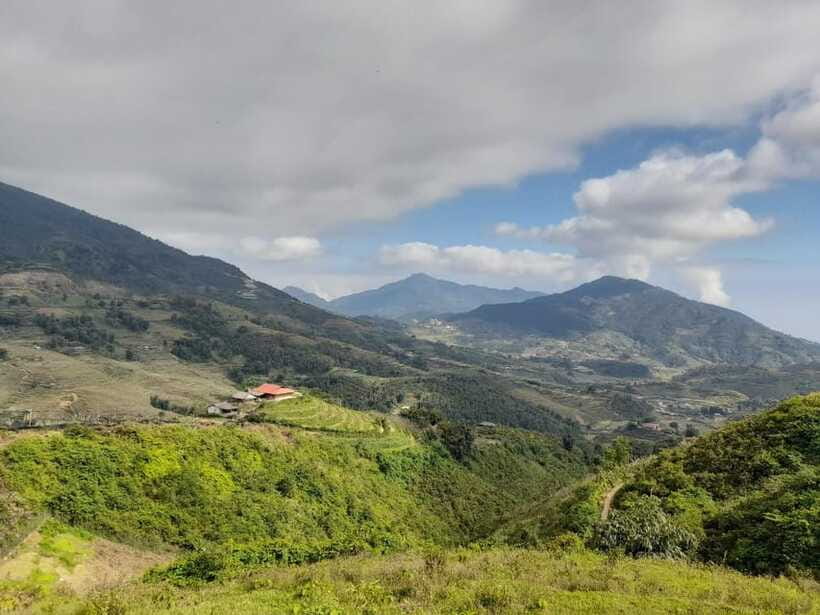
I would choose this outing if you want to see the valley on foot, hear about village life from a local guide, and fit a meaningful walk into a half day. It suits active families and visitors with limited time, provided everyone in the group can manage several hours on uneven ground. One family of five found the distance a good fit, but that is not a guarantee for every child or group.
It is also a good match if you prefer smaller, more personal encounters to a drive through more heavily visited places. The guide may take you through fields or less crowded paths, depending on the day. The experience is not fully insulated from commerce, however, and offers to buy handicrafts can be part of the walk.
Skip it if you need smooth paths, have difficulty with slopes, or would be upset by rain and mud. The tour is not suitable for wheelchair users. If you are uncertain about your fitness, a private or smaller-group walk may make it easier to move at your own pace, though the standard group size is not specified.
Book this trek if you want a solid introduction to Sapa’s valley villages, can handle a roughly 9 km walk, and value local conversation as much as the views. If your priority is an easy outing on firm paths, choose another way to see the area.
FAQ
How long does the tour last?
The activity duration is 270 minutes, or four and a half hours. The morning schedule starts with hotel pickup around 8:10 to 8:20 and aims to return to Sapa Town around noon.
How far will I walk?
The trek is about 9 km and takes roughly four hours on foot.
Which villages does the route visit?
The walk passes through Y Linh Ho, Lao Chai, and Ta Van.
What communities will I learn about?
The route includes Lao Chai, home to Black Hmong people, and Ta Van, home to Dzay people. The local guide shares information about ethnic minority cultures in the Sapa area.
Is an English-speaking guide included?
Yes. An English-speaking local guide is included. The tour also lists Vietnamese as a guide language.
What is included in the price?
The price includes air-conditioned bus transport between Sapa, Y Linh Ho, Ta Van, and Sapa, an experienced driver, an English-speaking local guide, and entrance tickets to the indicated sites.
What is not included?
Beverages, travel insurance, VAT, personal expenses, and anything not clearly stated as included are extra.
What should I bring?
Bring sunglasses, a sun hat, a camera, sunscreen, sportswear, hiking pants, hiking shoes or sports shoes, and a first aid kit. Good footwear is especially useful on muddy or slippery sections.
Is the trek suitable for wheelchair users?
No. The tour is not suitable for wheelchair users.
Can I cancel for a refund?
Yes. You can cancel up to 24 hours in advance for a full refund. The tour also offers a reserve-now, pay-later option.
New on the list for Sa Pa
- AUTHENIC 2D1N Trek & Bungalow Retreat with Dinh Hmong Family★ 5.0 · 19 reviews
- From Hanoi: Sapa 3-Day Medium Trek and Limousine Trip★ 4.5 · 59 reviews
- 2 Night Lao Chai-Ta Van Homestay- Trekking & Fansipan Visit★ 4.0 · 8 reviews
- 2 days 2 nights in Sapa – Moana – Fansipan – Cat Cat Village★ 4.2 · 6 reviews
- 2 DAYS Explore SA PA’S Village through Scenic walking Trails★ 5.0 · 6 reviews
- 2-Day Fansipan Mountain Trek – Indochina’s Highest Peak★ 4.3 · 42 reviews
- 2 Day-2 Night Sapa Trekking: Overnight Train &Limousine Bus★ 3.9 · 7 reviews
- Trekking Sapa 1 Day With Local Guide, Terraced Rice Fields★ 4.5 · 5 reviews
Sapa Trekking Tours, compared.

Halong Bay Full Day with Kayaking, Hiking viewpoint, Cave – Deluxe To Luxury
Read our review →
Sa Pa: Muong Hoa Valley Trek and Local Ethnic Villages
Read our review →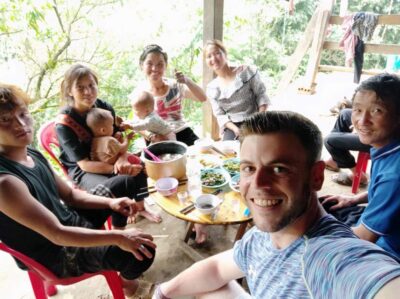
Sapa 3 Days 2 Nights Trekking Tour (1 Night In Ta Van Village, 1 Night In Hotel)
Read our review →
Eco Adventure Terrace Fields and Local Villages Trek
Read our review →
3-Day Trekking Adventure of Sapa from Hanoi – Stay Ta Van Village
Read our review →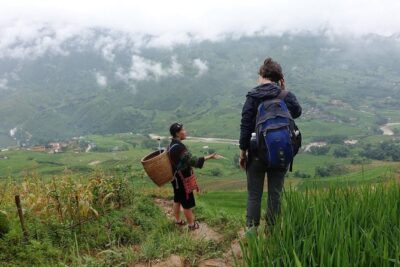
Number one top rated ethical cultural trekking and homestay by ETHOS
Read our review →Browse the lists this tour appears in